




TV’s golden age is real
But for every Breaking Bad, more shows are just bad
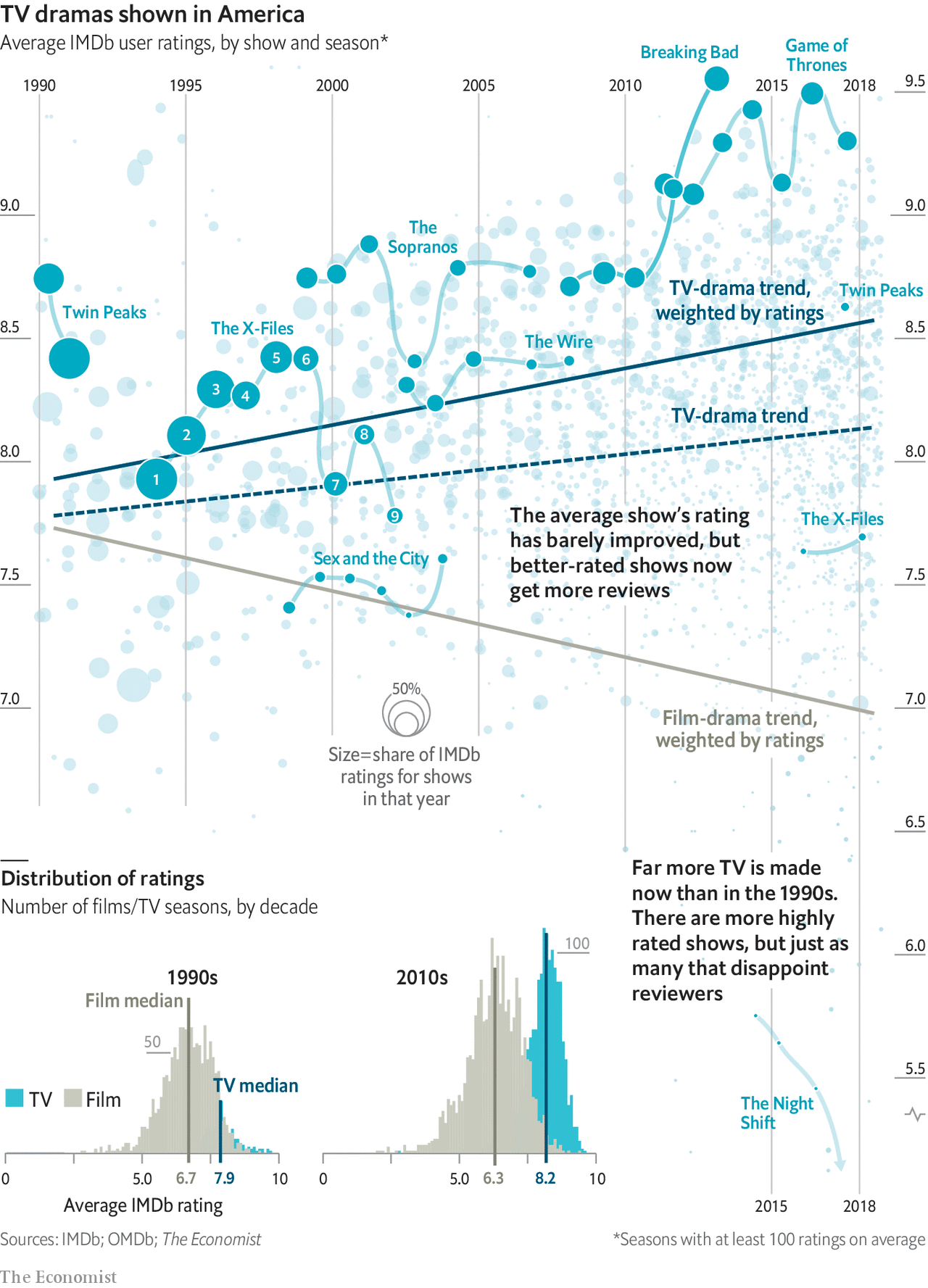
IN 2011 ALEXIS PICHARD, a French academic, declared that American television was enjoying a “new golden age”, marked by vast improvements in cinematography and storytelling. Although critics disagree over when TV emerged as a serious art form, there is consensus that shows like “The Wire” and “Breaking Bad” have brought new sophistication to the small screen.
The picture that emerges from viewers—or at least those who post reviews on IMDb, an online database—is a bit fuzzier. Among dramas from the 1970s with at least 100 ratings, the median show that aired in America had an average score of 7.85 out of ten. In the 1990s, this figure was the same. And since 2010, it has risen to 8.17—a tiny gain. If you were to choose at random one drama from the 2010s and one from the 1990s, the modern one would score worse than the older one 37% of the time.
Does this paltry pace of progress mean that the much-touted golden age of television is much ado about nothing? Not necessarily. In IMDb users’ opinions, far more great TV is made today than ever before. Since 2010, 73 different seasons of dramas have exceeded an average rating of 9.0. In the 1990s, only 11 did. The reason why the average has barely budged is that the onslaught of new shows includes plenty of rubbish. For every brilliant “Game of Thrones”, chronic disappointments like “The Night Shift”, a mediocre medical drama, are only a few clicks away.
Fortunately for audiences, streaming platforms make avoiding such duds far easier. These services’ recommendation systems guide viewers to content they are likely to enjoy. Sure enough, the highest-rated shows now get the most reviews. From 1993 to 2013, the average IMDb rating of a typical show rose by just 0.26 points. But the average weighted by the number of ratings climbed much more, by 0.89 points. That suggests viewers are finding shows they like far more often today than in the past.
This upward trend may also result from changes in the reliability of the data. Most dramas reviewed on IMDb are modern, and many ratings of older ones were posted years after the shows aired. Yet even if TV’s golden age is over-hyped, the medium is still viewers’ best bet. IMDb users give the average film drama a rating nearly as bad as those of the worst dramas on TV.
Sources: IMDb; OMDb; The Economist
Explore more
See the latest from topics you followThis article appeared in the Graphic detail section of the print edition under the headline “The end of channel surfing”

From the November 24th 2018 edition
Discover stories from this section and more in the list of contents
Explore the edition
Taking you behind the scenes of our data journalism
Directly to your inbox every week
Labour faces a drubbing in England’s local elections
The party could lose more than half of the council seats it is defending
The war in Iran has sent American inflation sharply higher
Our predictive index has reached a sizzling 3.6%
Why eldest siblings are brainier
A new study finds that sickness may play a role
Even Hungary’s skewed elections might not save Viktor Orban
The ruling party is playing dirty. But our analysis shows the liberal opposition has a real chance of winning
Global democracy is in better shape than you think
EIU’s annual index suggests an end to the democracy recession
Donald Trump’s approval rating has sunk to Joe Biden’s lowest point
He is mirroring his predecessor’s post-debate slump of 2024