The Great Launch Inversion
In 1982 the Soviet Union launched 108 rockets to orbit. By 2018 its successor managed ten — and the world's most prolific operator was a private American firm that did not exist when the Soviet Union dissolved.
In 1982 the Soviet Union launched 108 rockets to orbit — more than four times what the United States managed that year. By 2018 the inheritor of that programme, Russia, had launched ten. The single largest launcher in 2018 was a state agency that did not exist when Sputnik flew, and the second largest was a private company that did not exist when the Soviet Union dissolved.
Through October 2018, China conducted 28 orbital launches, the United States 27, the rest of the world 15, and Russia 10. Among individual operators, only SpaceX, with 17 launches, breaks past the United States' state count.
If you froze the world in 1985 and asked who would dominate the launch business in 2018, almost no one would have answered "a private American company and the People's Republic of China." That is what happened.
The long arc
Global launch cadence has never been steady. From three attempts in 1957, the world reached 139 launches in 1967 and stayed near that mark for two and a half decades — the high plateau of the Cold War. After 1991 the line falls off a cliff: the post-Soviet 1990s averaged 86 launches per year, and the floor came in 2004 with just 53.
During the Cold War, the duopoly was almost total. Through 1991, the USSR and US between them accounted for 95.6% of every orbital launch — 2,444 and 1,055 respectively. China contributed 0.9%. Everyone else managed 3.5%.
After 1991 the picture flattens dramatically. Russia carries forward 35.6% of the post-Soviet total, the United States 32.0%, "Other" rises to 19.4%, and China climbs to 13.0%. The recovery in the 2010s back toward 90 launches per year does not restore the old order — it builds a new one.
Global orbital launches per year, 1957-2018. Cold War (left) and Post-Cold War (right) eras shaded behind the line.
2018 data is partial — it runs through October only. The 2018 figure of 80 will continue to grow.
The bloc handover
Strip the global total apart by bloc and the handover is dramatic. The Soviet line is the dominant feature of the chart from 1967 to 1991, peaking at 108 launches in 1982 — a cadence the Americans never reached in any single year. The American line wobbles around 20 in the 1980s as defence-launch demand collapsed. China crawls along the floor for thirty years before lifting off after 2007.
By 2010 China is launching as many rockets per year as Russia. By 2018 it is launching more than anyone. The "Other" bloc — Europe, Japan, India, Israel, Iran, North Korea, two British and two Brazilian attempts — has thickened to a third strand of the picture, no longer the rounding error it was during the Cold War.
Yearly orbital launches by bloc, 1957-2018. Drag the slider or click a milestone to drive the year-line on the chart.
From state to market
Of the 5,726 launches in the data, 4,776 — 83.4% — were conducted by state agencies. Until 1984 the figure is 100%: every rocket above the Karman line was a government rocket. Private operators conducted 880 launches in total (15.4%). Startups, the smallest category at 1.2%, contributed 70.
The cross-over comes early. By 2000, private operators were already launching 45 rockets a year against the state's 38. The state line stays roughly flat at around 40-50 a year for the rest of the dataset; the private and startup lines fight for the top half of every chart from 2000 onward.
Yearly launches by agency type. State (blue) vs. private (green) vs. startup (red).
"Startup" in this dataset means just two firms: SpaceX (68 launches) and Rocket Lab USA (1).
SpaceX in fast-forward
SpaceX flew once in 2006. It did not reach 5 launches a year until 2014. Then 7. Then 8. Then 18 in 2017 — the year it ate the share previously owned by United Launch Alliance, Arianespace and Soyuz combined. By October 2018 it had flown 17 more.
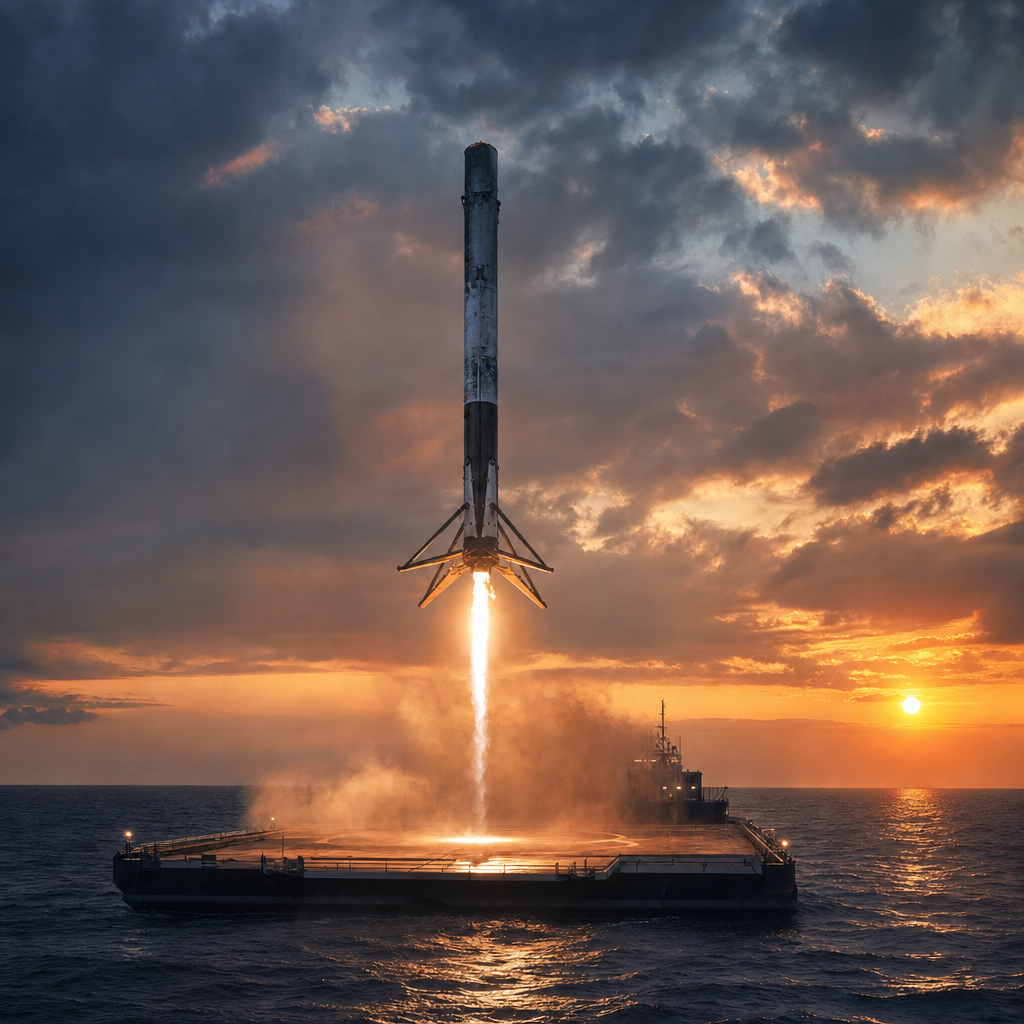
Plot SpaceX cumulatively against the cadence of the historical state programmes and the slope is the steepest line in the dataset. From a standing start in 2006 to 68 launches by October 2018, the curve doubles in length every two-to-three years. After the December 2015 Falcon 9 land-back, it doesn't bend — it bends harder.
The "startup" category in the data is, in practice, two firms: SpaceX with 68 launches and Rocket Lab USA with 1. Together they made 37 launches in 2017 and 2018 — more than half of all startup launches in the dataset's 61-year span. The category is essentially a graph of one company's first decade.
SpaceX cumulative orbital launches, 2006-2018. The 2015 marker is the first Falcon 9 first-stage land-back.
Learning to land
The dataset begins with rockets that fell out of the sky most of the time. Fifty-two attempts were made in 1957–1959; 28 of them failed — a 53.8% failure rate. The 1960s settled at 13%. The 1970s halved that to 5.1%. The 1980s halved it again, to 2.9%. Every decade since has stayed between 3% and 5%.
Failure rate by decade, 1950s-2010s. The 1950s figure is partial (1957-1959 only).
Sliced by operator type, the rates split in a counter-intuitive way. Private firms have the lowest failure rate at 2.6% — they joined late, with mature engineering. State agencies sit at 6.6%, dragged up by the Cold War's experimental years. Startups, the smallest cohort with 70 attempts, have the highest rate at 7.1% — a reminder that new vehicles still fail at roughly the historical maiden-flight rate.
Failure rate by agency type. Private < state < startup — the opposite of intuition.
The cumulative number for the entire 61 years is calmer than any single year of it: 5,384 launches reached orbit and 342 failed, a success rate of 94.0%.
A geography that has barely moved
Every launch in the dataset traces back to one of seventeen national sponsors, but only six of them — the Soviet Union, the United States, Russia, China, France, and Japan — have ever launched more than a hundred times.
The geography of these launches is remarkably stable. Baikonur, Plesetsk, Cape Canaveral, Vandenberg, Jiuquan, Xichang, Tanegashima, Kourou: the cluster of high-latitude or equatorial spaceports built between 1957 and 1972 has barely changed. New entrants — Wenchang in Hainan (China, 2016), Mahia Peninsula in New Zealand (Rocket Lab) — extend the map rather than redraw it. Kourou, in French Guiana, sits at 5°N and remains the most equatorial major spaceport in active use, giving European launchers a payload bonus that the Cold War's high-latitude pads cannot match.
All-time launches by sponsoring state (top 12). Bar color tracks bloc: red = USSR/Russia, blue = US, gold = China, gray = others.
The agencies CSV contains lat/long fields but they are mostly missing or set to "-". Per-launch coordinates are not available in the source data.
In 2018 China launched more rockets than anyone, SpaceX launched more than the entire Russian state apparatus, and Rocket Lab launched its first commercial mission from a sheep paddock in New Zealand. The leaderboard has twelve different operators on it, four state agencies and eight private or startup firms — the most fragmented year in the data.
Every operator that launched in 2018 (through October), colored by agency type.
The space race is not over; it has stopped being a race. What replaced the Cold War duopoly is a market with multiple incumbents, a Chinese state programme on the rise, and a single American startup setting the pace. The 1985 forecaster would not have called it.
Sources & Notes
- Data: Jonathan McDowell — JSR Launch Vehicle Database (2018-10 snapshot, via The Economist).
- Article context: The Economist — "The space race is dominated by new contenders" (18 October 2018).
- Background: Space Race, SpaceX, Spaceport, Comparison of orbital launch systems.
- Charts built with Vega-Lite v5. Data tables embedded inline from the analyst's pre-aggregated outputs.
- Caveats: 2018 data runs through October only. Soviet (SU) and Russian (RU) state codes are treated as a continuous lineage. The "startup" category contains only SpaceX and Rocket Lab USA.